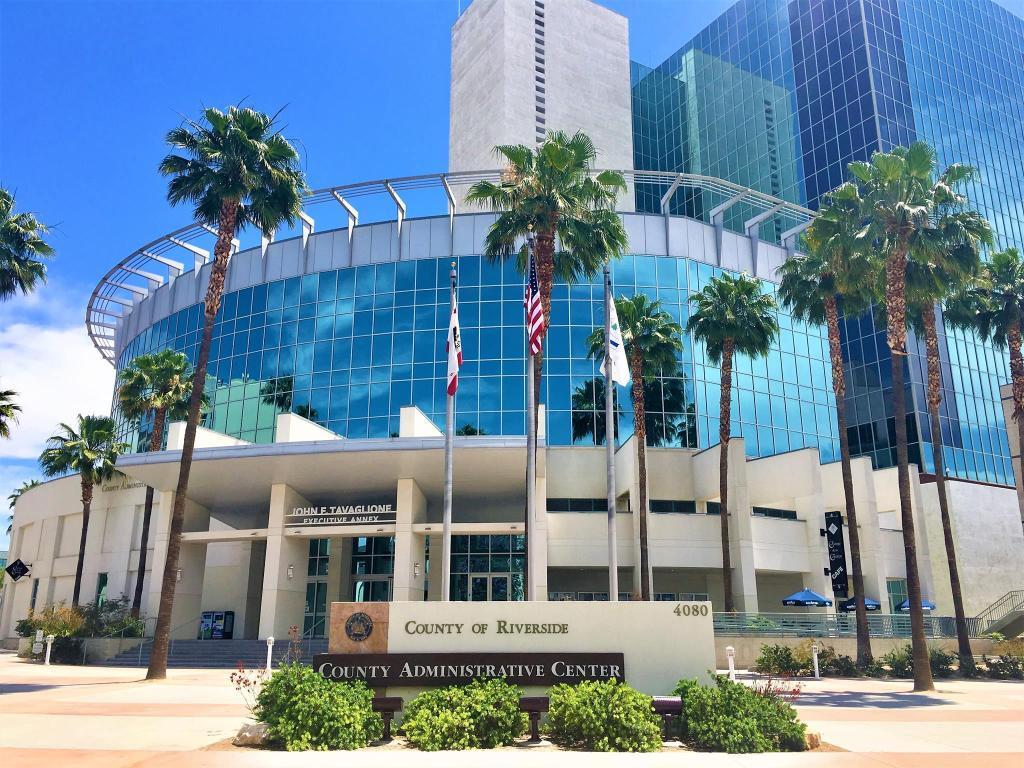

The proposed 2026 Climate Action Plan (CAP) update builds upon the County's 2019 Climate Action Plan by incorporating updated Greenhouse Gas (GHG) emissions data, current State climate policies, and revised GHG gas reduction measures. The update maintains the County's long-range GHG reduction strategy while aligning with the California Air Resources Board's (CARB) 2022 Scoping Plan for Achieving Carbon Neutrality (2022 Scoping Plan). The Riverside County 2026 Climate Action Plan update applies to all unincorporated areas of Riverside County and seeks to integrate the County’s past and current efforts with its future efforts to grow and thrive sustainably.
Image

Project Status
The County of Riverside scheduled a Planning Commission hearing on Wednesday, September 02, 2026, to consider adoption of the Riverside County 2026 Climate Action Plan Update (2026 CAP Update), consistent with the California Air Resources Board's 2022 Scoping Plan for Achieving Carbon Neutrality. The 2026 CAP Update includes: (1) an updated communitywide Greenhouse Gas (“GHG”) emissions inventory using calendar year 2022 as the baseline; (2) updated GHG emissions forecasts for 2030 and 2045 and revised GHG reduction targets; (3) revised reduction measures consistent with State climate policy; (4) updated GHG source categories and implementation strategies; (5) revised implementation, monitoring and reporting procedures, and (6) a CAP Consistency Checklist that replaces the 2019 CAP California Environmental Quality Act (“CEQA”) Threshold and Screening Tables and provides one method of evaluating GHG impacts and project consistency during CEQA review. The County of Riverside 2026 Climate Action Plan update applies to the unincorporated areas of Riverside County.
Meetings
| Date | Meeting | Location | Meeting Materials |
|---|---|---|---|
| 03/19/2025 | Community Workshop #1 (Planning Commission) | County Administrative Center (CAC) 1st Floor Board Chambers 4080 Lemon St. Riverside, CA 92501 | Staff Report Hearing Package PowerPoint Presentation |
| 09/18/2025 | Virtual Community Meeting | Microsoft Teams | PowerPoint Presentation |
| 11/05/2025 | Planning Commission (Continued) | County Administrative Center (CAC) 1st Floor Board Chambers 4080 Lemon St. Riverside, CA 92501 | Staff Report Hearing Package |
| 09/02/2026 | Planning Commission (Tentative) | County Administrative Center (CAC) 1st Floor Board Chambers 4080 Lemon St. Riverside, CA 92501 | Coming Soon |
Draft Documents
Planning Commission Drafts
Workshop Drafts
View the 2025 workshop draft of the Climate Action Plan (Draft PDF)
Archive
The 2019 Climate Action Plan (CAP) Update was approved on December 17, 2019. The 2019 CAP Update refines the County's efforts to meet greenhouse gas (GHG) reduction strategies, specifically for the years 2035 and 2050. The 2019 CAP Update builds upon the GHG reduction strategies in the 2015 Climate Action Plan.
View the 2019 Climate Action Plan (CAP) Update (PDF)
What is the Climate Action Plan (CAP)?
The Climate Action Plan (CAP) is a standalone policy document for the unincorporated County of Riverside that provides a detailed framework for land-based decisions to reduce Greenhouse Gas (GHG) emissions from existing and future developments. It establishes the County's approach for evaluating whether discretionary development projects are consistent with the County's GHG reduction strategy under the California Environmental Quality Act (CEQA).
Generally, the CAP contains information on community-wide GHG emissions inventory based on the CARB scoping plan reporting year as the baseline, forecasted Business As Usual (BAU) and Adjusted Business As Usual (ABAU) emissions based on milestone years, sectors contributing emissions, State and local reduction measures, screening GHG emissions tool for projects, and implementation.
What is the purpose of the CAP?
The CAP establishes the County’s strategy for reducing community-wide GHG emissions through State and local reduction measures, implementation programs, and periodic monitoring. It also supports environmental review by providing a consistent method for evaluating GHG emissions from discretionary development projects. To align with the State’s GHG reduction goals of 40 percent below 1990 levels by 2030 and 85 percent below 1990 levels by 2045, the County’s corresponding reduction targets are 49 percent below its 2008 baseline by 2030 and 87 percent below its 2008 baseline by 2045.
What role does California Air Resources Board (CARB) have in the CAP?
The California Air Resources Board (CARB) is the State agency responsible for implementing many of California’s climate change programs and regulations. Assembly Bill 32, the California Global Warming Solution Act of 2006, directed CARB to develop a statewide Scoping Plan identifying strategies to achieve California’s GHG reduction goals. CARB periodically updates the Scoping Plan to reflect changes to State law, technology, and progress toward the State’s climate goals.
What is the 2022 Scoping Plan?
The California Air Resources Board's (CARB) 2022 Scoping Plan for Achieving Carbon Neutrality identifies the State's strategy for achieving its GHG reduction targets and reaching carbon neutrality by 2045. The Scoping Plan evaluates strategies related to transportation, building energy, clean energy, natural and working lands, and other major sources of GHG emissions. The County uses the 2022 Scoping Plan and current State climate goals to inform the reduction targets and measures included in the 2026 CAP Update.
When will CARB come out with a new scoping plan?
Is the County required to have a CAP?
State law does not generally require local governments to adopt a Climate Action Plan. Riverside County voluntarily adopted its first CAP in 2015 in conjunction with the General Plan Update. Following adoption, the County entered into a Partial Settlement Agreement that established additional commitments related to CAP implementation, monitoring, and periodic updates. The County has continued to update the CAP consistent with those commitments and changes in State climate policy.
What legislation has passed related to the CAP?

How often is the CAP updated?
The CAP is reviewed and updated, if necessary, every four years to reflect the California Air Resource Board’s (CARB) updated scoping plans for reduction of GHG emissions within the State, changes in State climate policy, and from the result of a 2015 Partial Settlement Agreement.
How does it relate to CEQA?
Senate Bill 97 (2007) established greenhouse gas emissions as an environmental issue to be evaluated under the California Environmental Quality Act (CEQA). CEQA Guidelines Section 15183.5 allows a qualified greenhouse gas reduction plan, such as the County's CAP, to be used to streamline the analysis of greenhouse gas emissions for future development projects.
The 2026 CAP Consistency Review Checklist provides one method for evaluating a project's greenhouse gas emissions and consistency with the County's GHG reduction strategy. The CAP does not exempt a project from CEQA or replace the evaluation of other environmental impacts.
Where does it apply?
The 2026 CAP applies to the unincorporated County of Riverside.
What are Greenhouse Gas (GHG) Emissions?
The Intergovernmental Panel on Climate Change (IPCC) identifies six primary GHG compounds: carbon dioxide (CO2), methane (CH4), nitrous oxide (N2O), perfluorocarbons (PFCs), sulfur hexafluoride (SF6), and hydrofluorocarbons (HFCs). Each GHG has a different capacity to trap heat and therefore GHG emissions are generally reported in metric tons (MT) of carbon dioxide equivalents (CO2e).
Global Warming Potential (GWP) is the value assigned to each GHG to compare its warming effect relative to carbon dioxide. Carbon dioxide has a GWP of 1 and serves as the reference point for comparing the warming effects of other greenhouse gases.
The County CAP focuses on CO2, CH4, and N2O because these are the primary greenhouse gases associated with the emission sources evaluated in the County's community-wide inventory, including transportation, energy use, solid waste, wastewater, and agriculture.
Where does the CAP measure its data from?
Data and calculations are included in Appendix B of the 2026 CAP. The data is typically segregated into direct and indirect sources but are not separate of another. Therefore, the 2026 CAP Update discusses emissions to the general source categories of on-road and off-road transportation, energy, water and wastewater, solid waste, aviation, and agriculture sources. it on.
What does the 2026 CAP update consist of?
The 2026 CAP Update includes a community-wide GHG emissions inventory using calendar year 2022 as the baseline and evaluates future emissions under Business-as-Usual (BAU) and Adjusted Business-as-Usual (ABAU) scenarios for 2030 and 2045. The inventory evaluates emissions from transportation, energy (electricity and natural gas), agriculture, solid waste, water and wastewater, aviation, and off-road equipment. Based on this analysis, the 2026 CAP Update identifies State and local reduction measures needed to achieve the State-aligned GHG targets of 40 percent below 1990 emissions levels by 2030 and 85 percent below 1990 emissions levels by 2045.
What changed from the 2019 CAP?
The proposed 2026 CAP Update builds upon the County's 2019 Climate Action Plan by retaining many of the existing GHG reduction measures while revising others to reflect current State climate policy, updated technologies, and implementation experience. Major updates include:
- Updated GHG inventory using calendar year 2022 as the baseline.
- Updated GHG reduction targets for 2030 and 2045 to align with current State climate goals.
- Revised transportation measures to reflect continued expansion of zero-emission vehicles and fleet electrification.
- Updated building energy efficiency measures to reflect current Title 24 Building Energy Efficiency Standards and renewable energy requirements.
- Expanded implementation measures supporting renewable energy, energy storage, and clean transportation technologies.
- Updated implementation, monitoring, and reporting procedures.
- Replaced the 2019 CEQA Threshold and Screening Tables with a CAP Consistency Checklist that provide one method for evaluating greenhouse gas impacts and project consistency during CEQA review.
What are reduction measures and what do they do?
Reduction Measures are policies aimed to reduce GHG emissions through promotion of new or existing programs, installation of infrastructure, encouragement of construction practices of homes, reduction of Vehicles Miles Travelled (VMT), and collaboration with other agencies. Reduction Measures are categorized as R1 and R2.
R1 measures are attributed to the State of California legislation as it has set specific targets for reducing GHG emissions from the burning of fossil fuels in both power plants and vehicles by adopting various regulations. In addition, State energy efficiency and renewable requirements provide another level of reductions.
R2 measures are based on Local policy and topography. The CAP aligns its R2 measures with the 2022 Scoping Plan and State measures. R2 measures are those measures that either can be quantified to show the value of the reduction from the incorporation of those measures, or the supportive measures or methods of implementation for the quantifiable measures.
What is the State’s and County goal of GHG reductions?
The State’s goal is to achieve the below:
- 1990 GHG emission levels by 2020.
- 40% below 1990 GHG emission levels by 2030.
- 85% below 1990 GHG emissions levels by 2045.
The County of Riverside reduction goals are:
- 15% below 2008 baseline GHG emissions by 2020. This target was met.
- 49% below 2008 baseline GHG emissions by 2030.
- 87% below 2008 baseline GHG emissions by 2045.
How will the County Monitor and Report on GHG emissions?
The County has a Mitigation Monitoring and Reporting Program (MMRP) and checklist that was adopted with General Plan Amendment (GPA) No. 960, EIR No. 521 on December 05, 2018, and amended July 17, 2018, consistent with California Code Regulations Title 14 § 15097 (Mitigation Monitoring or Reporting) and § 15126.4 (Consideration and Discussion of Mitigation Measures Proposed to Minimize Significant Effects). The MMRP is used to determine that approved mitigation measures, standard conditions, and project design features are implemented subsequent to project approval. A Mitigation Monitoring and Reporting Checklist was created to provide verification that all applicable mitigation measures relative to significant environmental impacts are monitored and reported. Monitoring will include 1) verification that each mitigation measure has been implemented; 2) recordation of the actions taken to implement each mitigation; and 3) retention of records in the Project file. To streamline environmental determination of significance of discretionary projects, the County established a 100-point based GHG checklist with the 2019 CAP and will be updated with 2026 CAP Consistency Checklist.
How does the County determine whether a project is below the 3,000 MTCO₂e screening threshold?
The 3,000 MTCO₂e per year screening threshold is intended to identify smaller projects that are generally expected to have a less-than-significant GHG impact. The threshold is based on a statistical analysis of development projects designed to capture approximately 90 percent of GHG emissions from new development for further evaluation.
Applicants seeking to use the 3,000 MTCO₂e per year screening threshold must quantify the project's GHG emissions using the current version of CalEEMod. The CAP Consistency Review Checklist includes examples of project sizes that may generate approximately 3,000 MTCO₂e per year; however, these examples are for reference only and do not replace project-specific emissions modeling.
Contact Us
Victoria Gomez, Assistant Planner
Phayvanh Nanthavongdouangsy, Principal Planner
Phone: 951. 955. 2525
Email: [email protected]
Riverside Office
County Administrative Center
4080 Lemon St, 12th Floor,
Riverside, CA 92501
Image